


Authentic Nuapatna Lemon Yellow 4-Ply Mulberry Silk Khandua Saree | Lotus & Parrot Ikat Design
Guarantee Safe Checkout
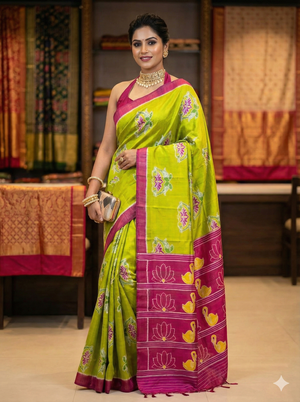
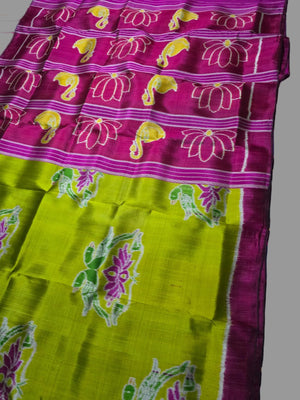
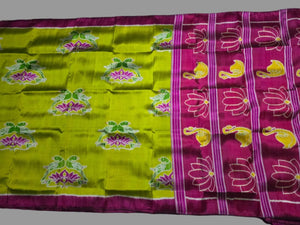
Radiate positivity and grace in this stunning Lemon Yellow Mulberry Silk Saree. A masterpiece of Odisha handloom, this saree features a brilliant, glossy yellow body that stands in striking contrast to its bold Deep Pink borders.
The highlight of this drape is the traditional blooming Pink Lotuses, a sawtooth design woven with precision that frames the saree beautifully. Unlike sheer silks, this is woven from high-quality Mulberry silk, offering a rich, opaque texture with a natural shine that catches the light effortlessly. The look is completed with a simple yet elegant striped pallu in matching rust tones.
Design Pattern:
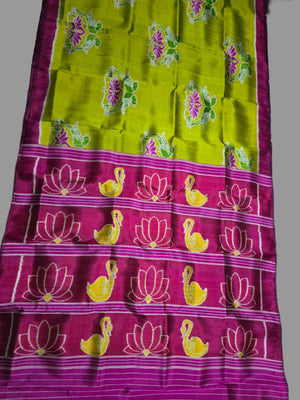
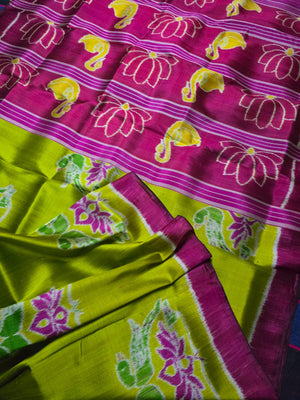
- Body: The saree features a vibrant Lemon Yellow base woven from high-quality 4-ply mulberry silk, giving it a luxurious, smooth texture and distinct sheen. It is adorned with large, artistic Ikat motifs depicting blooming Pink Lotuses paired with stylized Green Parrots, creating a lively and refreshing aesthetic.
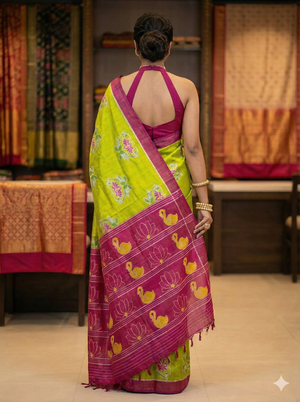
- Border: A rich Deep Pink (Magenta) contrast border frames the saree, providing a bold separation from the bright body.
- Pallu: The elaborate pallu is the highlight, set in a matching Deep Pink background. It features alternating horizontal bands of auspicious Ikat motifs: rows of large blooming Lotuses and rows of graceful Swans (Hamsa) in bright yellow, symbolizing purity and grace.
Specifications
- Saree Color: Lemon Yellow body with Deep Pink border & pallu
- Fabric: 4-Ply Pure Mulberry Silk (Khandua Pata)
- Wash Care: Dry Clean
- Brand: SUTA-SAGA
- Product category: Khandua Silk
- Length: 6.25 Metres (including blouse)
Notes
- Model's blouse is for display only; a running blouse piece is included. For a bold look, try pairing this saree with a contrast blouse.
- Slight color variations are to be expected and are a characteristic feature of authentic, hand-dyed textiles.
- Please embrace the slight irregularities of this handwoven drape, as the true beauty of handloom lies in its unique imperfections.
- Digital Representation: We use AI technology to showcase the styling potential of this saree. The fabric and details are 100% true to the actual product.
----------------------------------------------------------------------------------------------------
History of the Khandua Silk Saree
1. Divine Origins (12th Century) Originating in the 12th Century, the Khandua saree is linked to the poet Jayadev. He wove verses of his epic Gita Govinda into silk as an offering to Lord Jagannath. This tradition survives today as the "Kenduli Khandua," a ritual cloth inscribed with lyrics that is worn by the deities every night.
2. Royal Patronage (18th Century) The craft was formalized around 1719 AD by King Ramachandra Dev II of Puri. He issued a royal decree appointing weavers from Nuapatna and Maniabandha as Sevakas (servitors), mandated to supply silk for the temple, thus securing the art form's future.
3. Distinct Weaving Clusters Production is centered in two villages with unique histories:
- Nuapatna: Home to Hindu weavers who are the primary suppliers for the Jagannath Temple rituals.
- Maniabandha: Historically a Buddhist settlement; weavers here (the Saraka community) blend Buddhist aesthetics (like elephant motifs) with Hindu traditions.
4. Design & Technique
- Meaning: "Khandua" refers to cloth worn on the lower body.
- Technique: It uses Single Ikat (Bandha), where threads are tie-dyed before weaving.
- Motifs: Designs are auspicious, featuring the Nabagunjara (a nine-animal mythical creature), elephants, lions, and Kumbha (temple borders).
- Colors: Traditionally uses Red, Yellow, and Orange; black and blue are strictly avoided in ritual contexts.
5. Modern Status Today, the Khandua Pata is a GI-tagged textile, protecting its authenticity. It has evolved from purely sacred cloth to the quintessential bridal saree for Odia weddings, symbolizing tradition and purity.
