
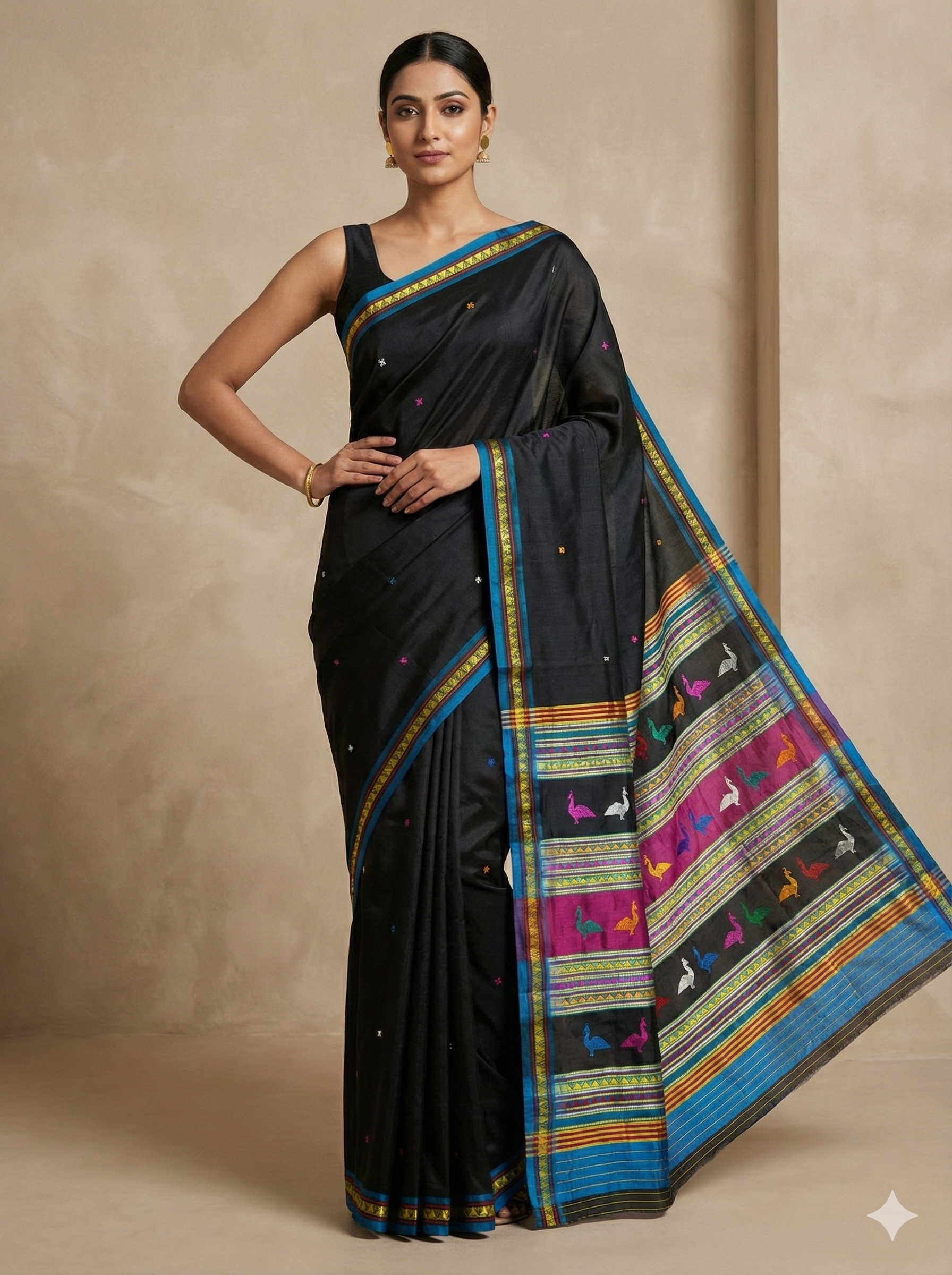
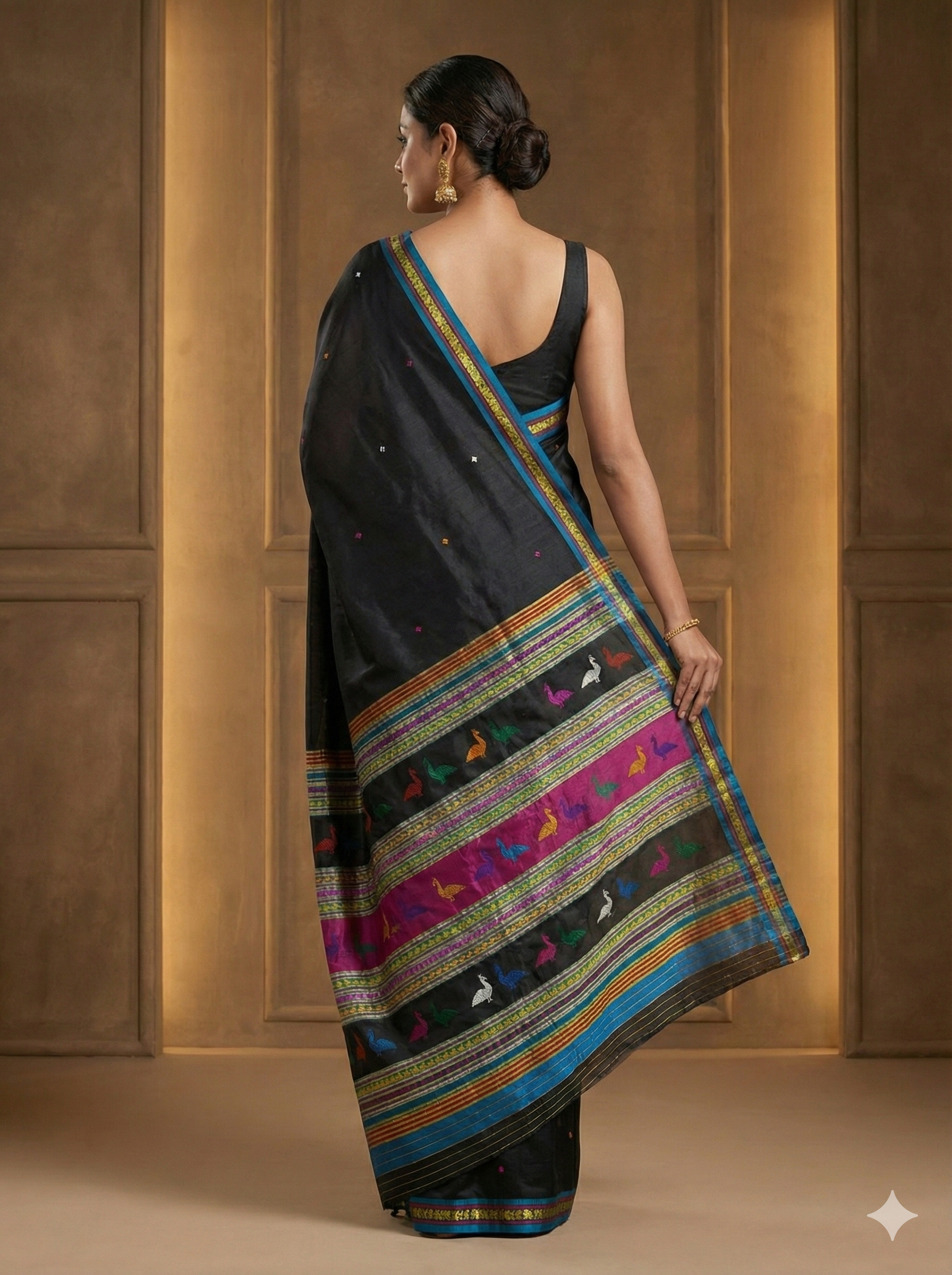


EXCLUSIVE Pasapalli Mulberry Pata Silk Saree – Heritage Checkered Ikat with Classic Anchal
Guarantee Safe Checkout
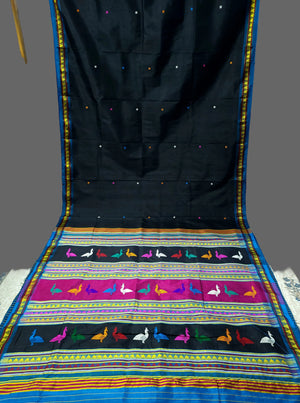
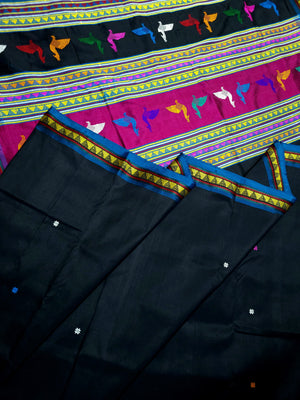
Step into the world of Odisha’s royal handloom legacy with this Handloom Khandua Mulberry Silk (Pata) Saree, exquisitely crafted in the 4‑ply Dongoria weaving style. This masterpiece features a luxurious black body adorned with delicate butis in subtle, multicolored accents—each motif meticulously woven to create a refined, sophisticated look.
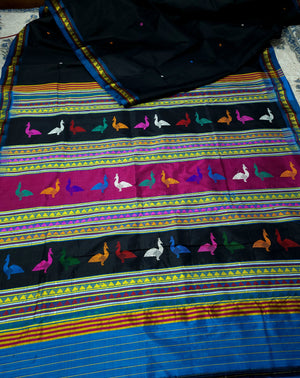
The highlight of this saree is its exclusive Dongoria Bird Anchal, showcasing vibrant, multicolored bird motifs arranged in striking horizontal panels. These birds, woven using traditional tie‑and‑dye bandha techniques, symbolize beauty, grace, and the cultural richness of tribal Dongoria craftsmanship. The pallu bursts with color, bordered by classic geometric ikat lines, blending heritage with contemporary elegance.
The use of pure mulberry silk in 4‑ply construction gives the saree a dense, heavy, luxurious drape that flows beautifully while maintaining durability, shape, and sheen for years. This saree comes with a matching blouse piece, completing the ensemble.
Perfect for weddings, celebrations, cultural gatherings, or for collectors of authentic Odia handloom, this saree is a true heirloom creation.
Specifications
- Saree Color: Black body
- Fabric: 4-Ply Pure Mulberry Silk (Khandua Pata)
- Wash Care: Dry Clean
- Brand: SUTA-SAGA
- Product category: Khandua Silk
- Length: 6.25 Metres (including blouse)
Notes
- Model's blouse is for display only; a running blouse piece is included. For a bold look, try pairing this saree with a contrast blouse.
- Slight color variations are to be expected and are a characteristic feature of authentic, hand-dyed textiles.
- Please embrace the slight irregularities of this handwoven drape, as the true beauty of handloom lies in its unique imperfections.
- Digital Representation: We use AI technology to showcase the styling potential of this saree. The fabric and details are 100% true to the actual product.
----------------------------------------------------------------------------------------------------
History of the Khandua Silk Saree
1. Divine Origins (12th Century) Originating in the 12th Century, the Khandua saree is linked to the poet Jayadev. He wove verses of his epic Gita Govinda into silk as an offering to Lord Jagannath. This tradition survives today as the "Kenduli Khandua," a ritual cloth inscribed with lyrics that is worn by the deities every night.
2. Royal Patronage (18th Century) The craft was formalized around 1719 AD by King Ramachandra Dev II of Puri. He issued a royal decree appointing weavers from Nuapatna and Maniabandha as Sevakas (servitors), mandated to supply silk for the temple, thus securing the art form's future.
3. Distinct Weaving Clusters Production is centered in two villages with unique histories:
- Nuapatna: Home to Hindu weavers who are the primary suppliers for the Jagannath Temple rituals.
- Maniabandha: Historically a Buddhist settlement; weavers here (the Saraka community) blend Buddhist aesthetics (like elephant motifs) with Hindu traditions.
4. Design & Technique
- Meaning: "Khandua" refers to cloth worn on the lower body.
- Technique: It uses Single Ikat (Bandha), where threads are tie-dyed before weaving.
- Motifs: Designs are auspicious, featuring the Nabagunjara (a nine-animal mythical creature), elephants, lions, and Kumbha (temple borders).
- Colors: Traditionally uses Red, Yellow, and Orange; black and blue are strictly avoided in ritual contexts.
5. Modern Status Today, the Khandua Pata is a GI-tagged textile, protecting its authenticity. It has evolved from purely sacred cloth to the quintessential bridal saree for Odia weddings, symbolizing tradition and purity.
