


EXCLUSIVE Pasapalli Mulberry Pata Silk Red Saree – Heritage Checkered Ikat with Classic Anchal
Guarantee Safe Checkout
EXCLUSIVE Pasapalli Mulberry Pata Silk Red Saree – Heritage Checkered Ikat with Classic Anchal
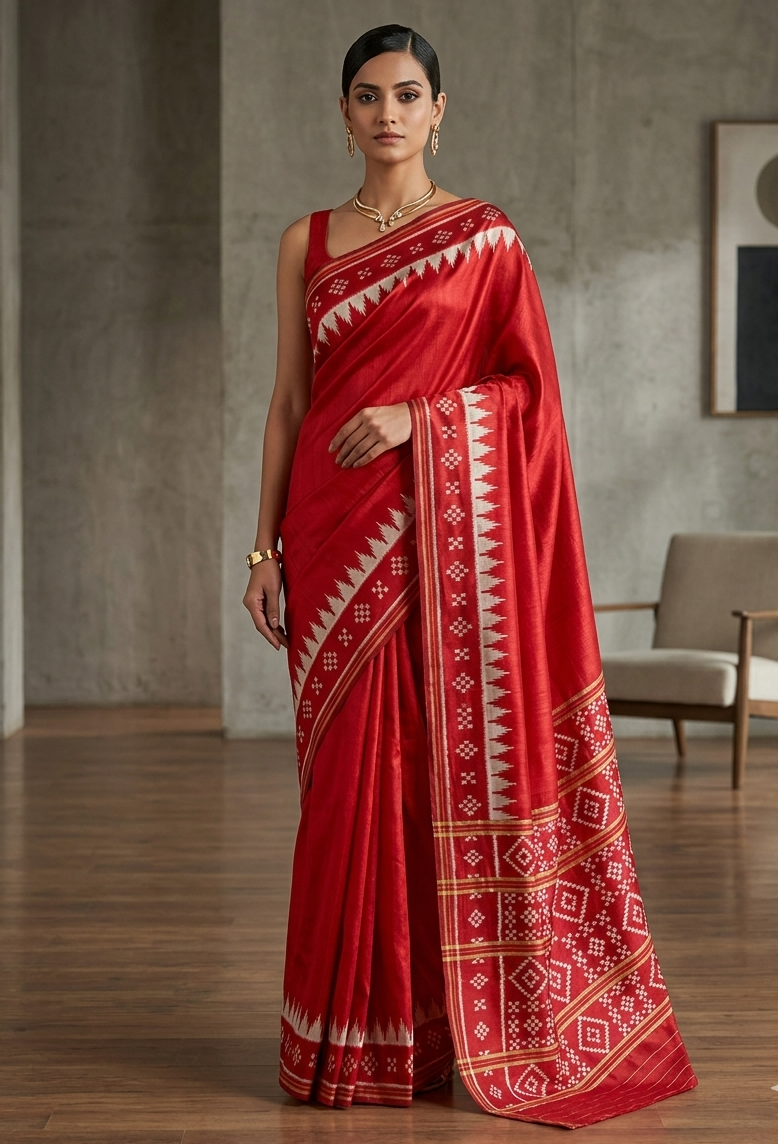
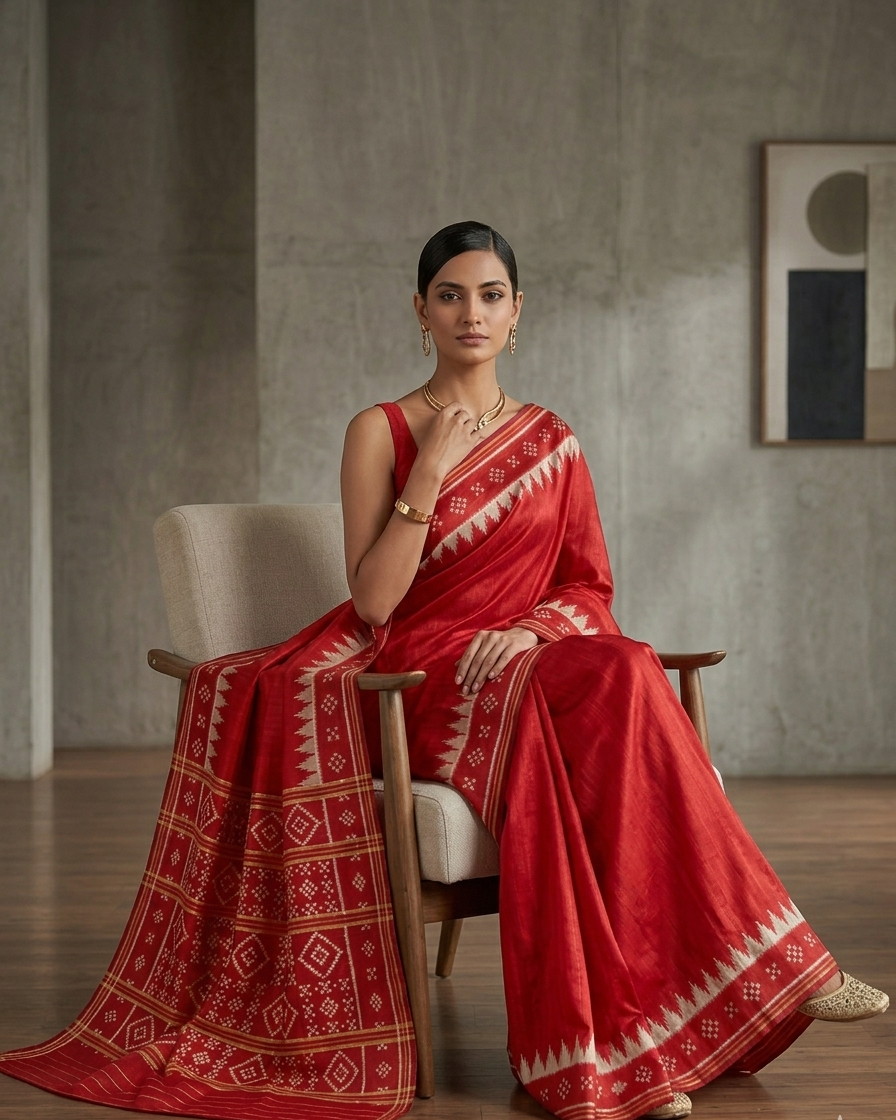
Step into the world of Odisha’s royal handloom legacy with this Handloom Khandua Mulberry Silk (Pata) Saree, exquisitely crafted in the 4‑ply Dongoria weaving style.
The most defining characteristic of this saree is its complex pattern, which is weaved into the fabric using the ancient technique of Odisha Ikat, known locally as 'Bandhakala'. The name 'Pasapalli' is derived from 'Pasa', meaning gambling games played on a chessboard-like grid (famously depicted in the Hindu epic Mahabharata), and 'Palli', indicating the pattern on the pallu or end piece.
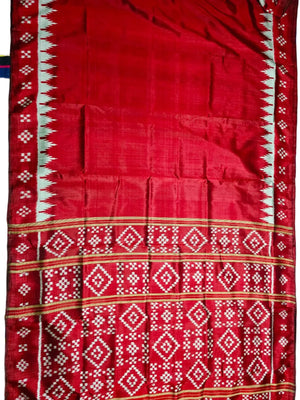
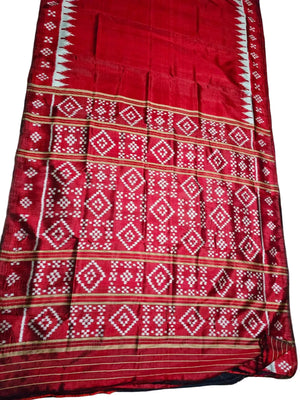
Main Body: The rich, brilliant red body of the saree features an intricate all-over Pasapalli (chessboard) check pattern. These checks are typically composed of alternating red, white, and often black squares, though this specific piece masterfully blends white and red squares with a complex inner ikat motif to create a refined texture within the grid.
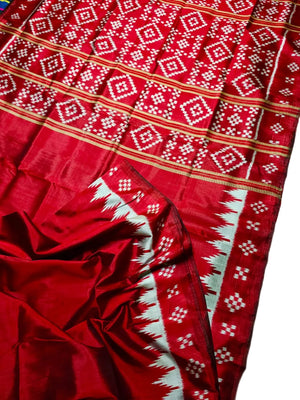
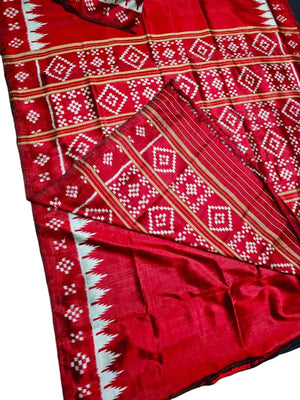
Striking Borders: Flanking the Pasapalli body are wide, highly contrastive white borders. These borders feature a bold, symmetrical zigzag or arrowhead motif. This specific geometric pattern, with its sharp points, is another signature Odisha handloom design, known for its precision and graphic appeal. It is sometimes referred to as a "Vana" border pattern when it has a jagged edge.
Pallu (End Piece): Although mostly draped, the end of the saree (pallu) usually contains the most intensified and intricate version of the Pasapalli chessboard pattern, often interspersed with other traditional Odisha motifs like shells (Sankha), wheels (Chakra), or floral and animal figures, created through double Ikat (where both warp and weft yarns are tied-dyed).
Specifications
- Saree Color: Red body
- Fabric: 4-Ply Pure Mulberry Silk (Khandua Pata)
- Wash Care: Dry Clean
- Brand: SUTA-SAGA
- Product category: Khandua Silk
- Length: 6.25 Metres (including blouse)
Notes
- Model's blouse is for display only; a running blouse piece is included. For a bold look, try pairing this saree with a contrast blouse.
- Slight color variations are to be expected and are a characteristic feature of authentic, hand-dyed textiles.
- Please embrace the slight irregularities of this handwoven drape, as the true beauty of handloom lies in its unique imperfections.
- Digital Representation: We use AI technology to showcase the styling potential of this saree. The fabric and details are 100% true to the actual product.
----------------------------------------------------------------------------------------------------
History of the Khandua Silk Saree
1. Divine Origins (12th Century) Originating in the 12th Century, the Khandua saree is linked to the poet Jayadev. He wove verses of his epic Gita Govinda into silk as an offering to Lord Jagannath. This tradition survives today as the "Kenduli Khandua," a ritual cloth inscribed with lyrics that is worn by the deities every night.
2. Royal Patronage (18th Century) The craft was formalized around 1719 AD by King Ramachandra Dev II of Puri. He issued a royal decree appointing weavers from Nuapatna and Maniabandha as Sevakas (servitors), mandated to supply silk for the temple, thus securing the art form's future.
3. Distinct Weaving Clusters Production is centered in two villages with unique histories:
- Nuapatna: Home to Hindu weavers who are the primary suppliers for the Jagannath Temple rituals.
- Maniabandha: Historically a Buddhist settlement; weavers here (the Saraka community) blend Buddhist aesthetics (like elephant motifs) with Hindu traditions.
4. Design & Technique
- Meaning: "Khandua" refers to cloth worn on the lower body.
- Technique: It uses Single Ikat (Bandha), where threads are tie-dyed before weaving.
- Motifs: Designs are auspicious, featuring the Nabagunjara (a nine-animal mythical creature), elephants, lions, and Kumbha (temple borders).
- Colors: Traditionally uses Red, Yellow, and Orange; black and blue are strictly avoided in ritual contexts.
5. Modern Status Today, the Khandua Pata is a GI-tagged textile, protecting its authenticity. It has evolved from purely sacred cloth to the quintessential bridal saree for Odia weddings, symbolizing tradition and purity.
