


Musturd Yellow Pen Kalamkari Kanjeevaram Silk Saree - Elephant Motif Kalamkari Kanjeevaram Silk Saree
Guarantee Safe Checkout
Musturd Yellow Pen Kalamkari Kanjeevaram Silk Saree - Elephant Motif Kalamkari Kanjeevaram Silk Saree
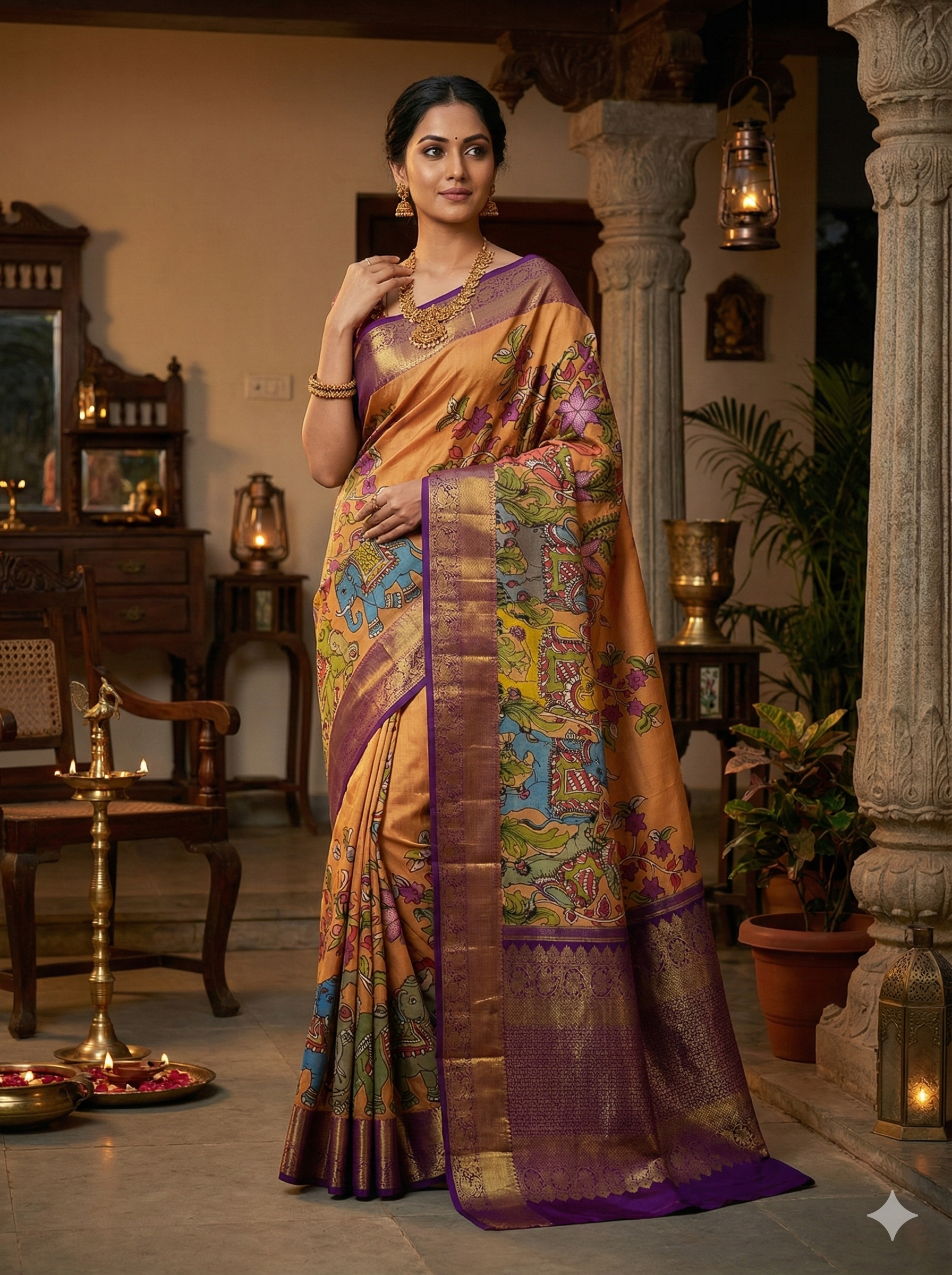
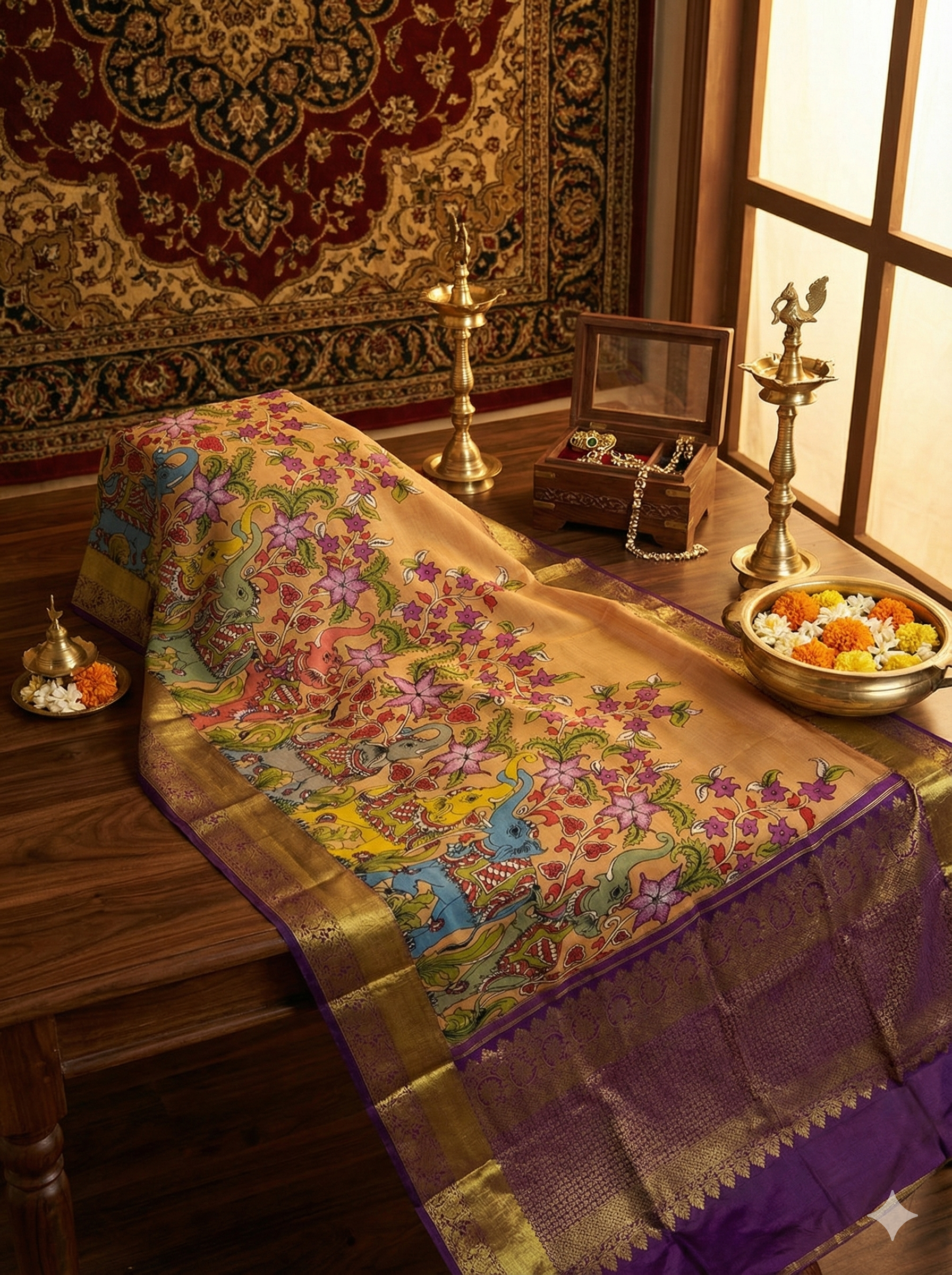
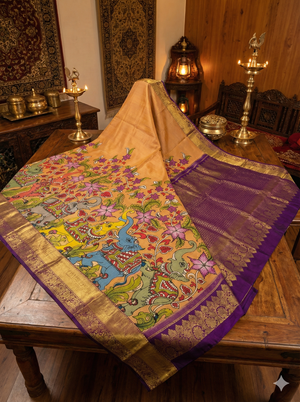
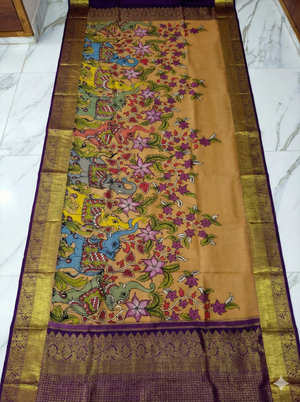
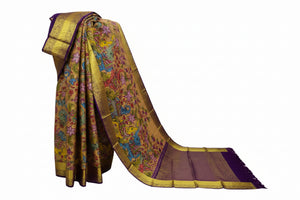
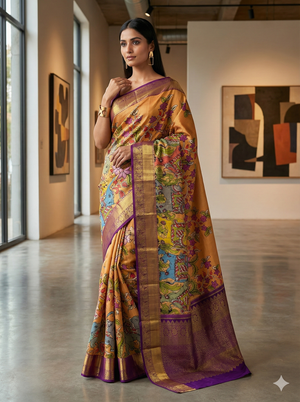
When Andhra’s Art meets Tamil Nadu’s Tradition. When Andhra’s Art meets Tamil Nadu’s Tradition. Celebrate heritage with this magnificent Mustard Yellow Kanjeevaram Silk Saree. The body is adorned with a highly auspicious Kalamkari Elephant (Gaja) procession, interwoven with vibrant floral creepers. A majestic Deep Purple border with rich Gold Zari bands frames the design, leading to a heavy brocade pallu. This saree is a symbol of royalty and prosperity, making it a perfect choice for weddings and religious ceremonies.
Design Pattern:
- Body: Mustard Yellow / Sandalwood / Beige with "Gaja" (Elephant) Procession & Floral Creepers
- Border: Deep Purple / Aubergine Contrast Border with Gold Zari bands
- Pallu: Deep Purple Heavy Zari Brocade (Geometric/Floral Trellis).
Specifications
- Saree Color: Mustard Yellow / Antique Gold with zari
- Fabric: Pure Silk
- Wash Care: Dry Clean
- Brand: SUTA-SAGA
- Product category: Kalamkari
- Length: 6.5 Meters (including blouse)
Notes
- Model's blouse is for display only; a running blouse piece is included. For a bold look, try pairing this saree with a contrast blouse.
- Slight color variations are to be expected and are a characteristic feature of authentic, hand-dyed textiles.
- Please embrace the slight irregularities of this handwoven drape, as the true beauty of handloom lies in its unique imperfections.
- Digital Representation: We use AI technology to showcase the styling potential of this saree. The fabric and details are 100% true to the actual product.
----------------------------------------------------------------------------------------------------------------------------
Kalamkari is an ancient Indian textile art form known for its intricate hand-painted or block-printed designs using natural dyes. The term specifically referring to the hand-painted tradition points to the Srikalahasti style, which is distinct from the block-printed Machilipatnam style.
History and Origins
- Etymology: The name "Kalamkari" is derived from two Persian words: Kalam (pen) and Kari (craftsmanship or work), literally translating to "pen-work". The Mughals gave this name to the craft after observing the artisans in the Deccan region.
- Ancient Roots: The art form dates back over 3,000 years. Archaeologists have found evidence of resist-dyed cloth resembling Kalamkari in the Indus Valley Civilization.
- Storytelling Tradition: Originally, the craft was used by groups of wandering musicians and painters known as chitrakattis. They moved from village to village, using large canvas bolts to illustrate and narrate stories from Hindu mythology like the Ramayana and Mahabharata.
- Patronage and Evolution:
- Vijayanagara Empire: The art flourished under the patronage of the Vijayanagara kings, where it was used for temple hangings and chariot banners.
- Islamic Influence: Later, under the Golconda Sultanate and the Mughals, the craft absorbed Persian influences. This led to the development of the Machilipatnam style, which featured Persian motifs like floral vines and the "Tree of Life" and was more secular in nature.
- The Two Schools:
- Srikalahasti: This style remained true to the ancient hand-painting technique. It developed around temples and is purely religious, focusing on Hindu epics and deities.
- Machilipatnam: This style evolved for trade and mass production, utilizing carved wooden blocks rather than the hand-held pen.
