
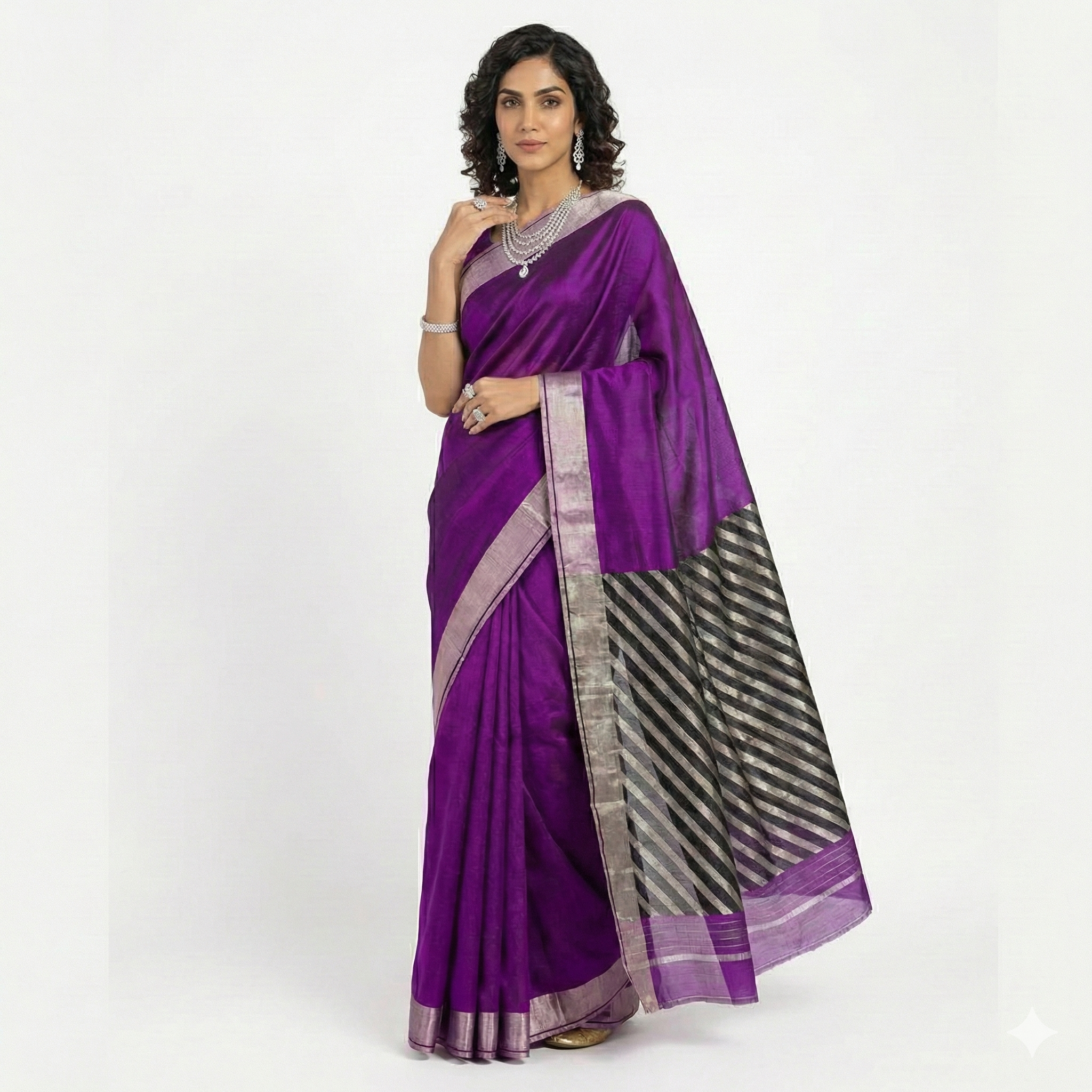
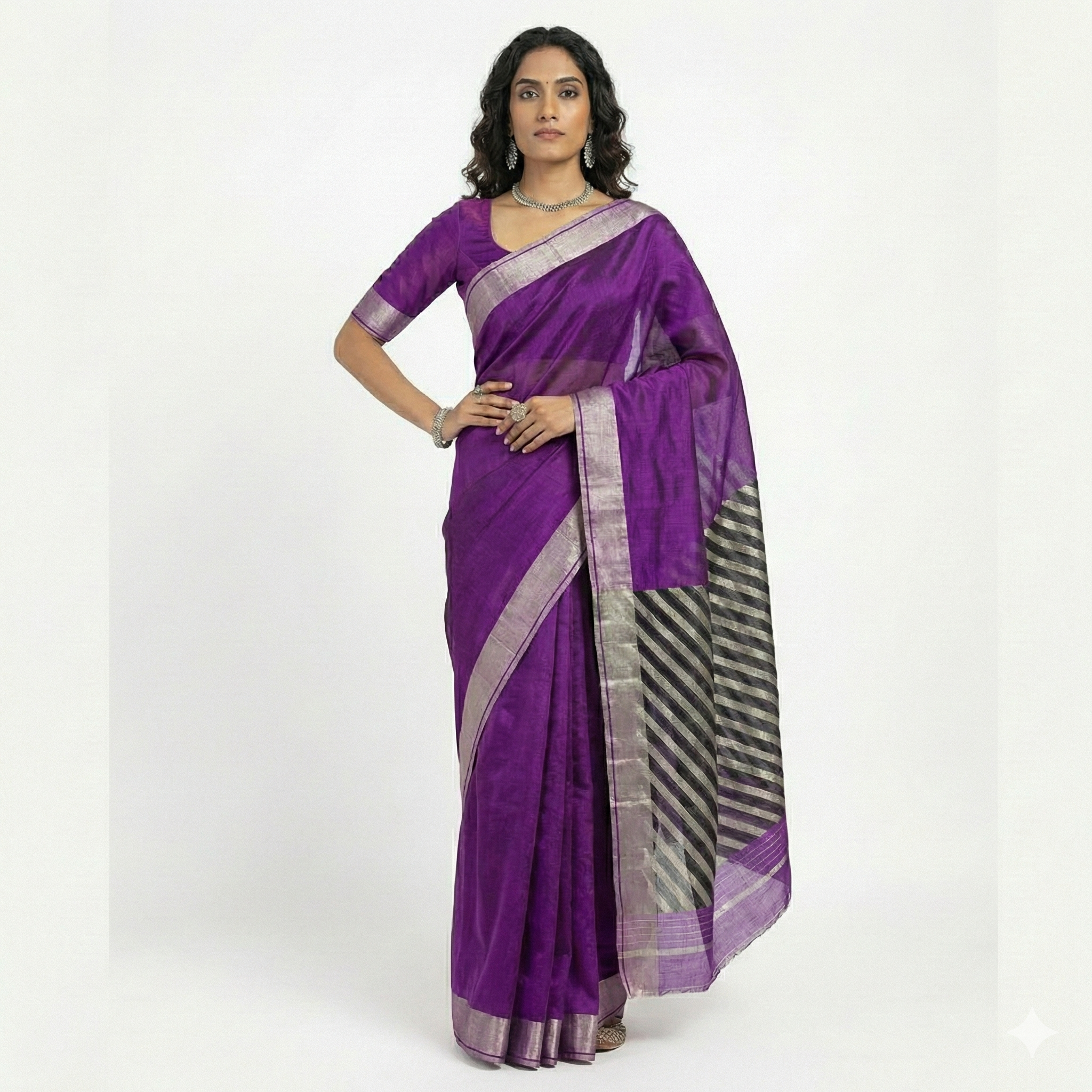


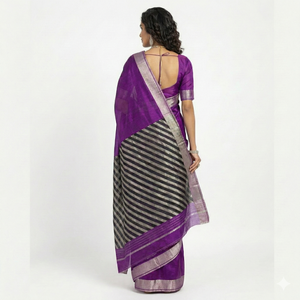
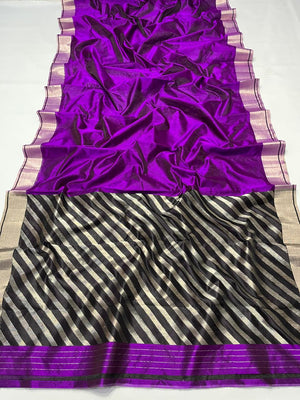
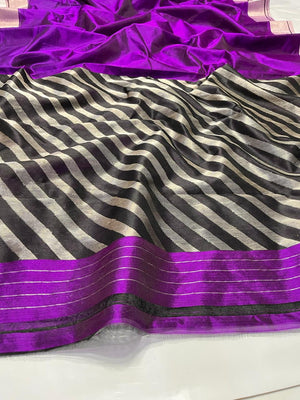
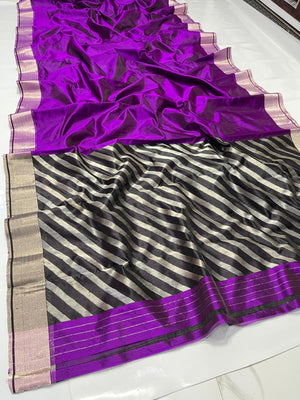
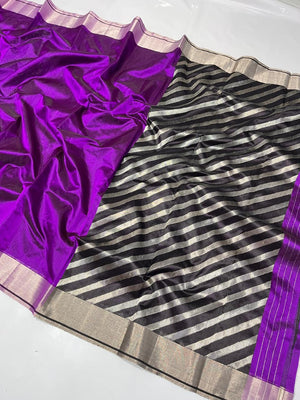

Premium unique Blue Pattu Silk Chanderi Saree with Silver zari patela border Taraj designing strips pallu | SUTA‑SAGA
Guarantee Safe Checkout
Premium unique Blue Pattu Silk Chanderi Saree with Silver zari patela border Taraj designing strips pallu | SUTA‑SAGA
Design Pattern:
- Body: Pattu silk Chanderi in an elegant pure purple shade, adorned
- Border: Simple, classic Chanderi-style Silver zari patela border highlights that enhance the saree’s understated charm.
- Pallu: Features a beautifully woven rich balck Taraj Designing pallu, showcasing intricate brocade-style weaving with traditional motifs that add a luxurious glow to the saree.
Specifications:
- Saree Color: Pure purple & silver zari motifs and a black pallu
- Fabric: Pattu Silk
- Wash Care: Dry Clean Only
- Brand: SUTA‑SAGA
- Product Category: Chanderi / Pattu Silk
- Length: 6.5 Meters (including blouse)
Notes
- Model's blouse is for display only; a running blouse piece is included. For a bold look, try pairing this saree with a contrast blouse.
- Slight color variations are to be expected and are a characteristic feature of authentic, hand-dyed textiles.
- Please embrace the slight irregularities of this handwoven drape, as the true beauty of handloom lies in its unique imperfections.
- Digital Representation: We use AI technology to showcase the styling potential of this saree. The fabric and details are 100% true to the actual product.
---------------------------------------------------------------------------------------------------
History of Chanderi Sarees
The timeless beauty of Chanderi sarees traces its origins to the historic town of Chanderi, located in the Ashoknagar district of Madhya Pradesh, India. Known for its rich cultural heritage, Chanderi has been a prominent weaving center since ancient times — with references dating back to the Vedic period (around the 7th century).
Royal Patronage & Ancient Roots
Chanderi weaving flourished under the patronage of Rajput and later Mughal rulers, who favored its delicate texture, shimmering zari work, and luxurious lightweight feel. Historical records link Chanderi to the trade routes of Central India, where fine handwoven textiles were exchanged with kingdoms across the subcontinent.
During the Mughal era, the craft evolved significantly. Artisans began introducing:
- Fine gold and silver zari,
- Traditional buttas,
- Floral and geometric motifs,
- And sophisticated weaving patterns inspired by royal aesthetics.
What Makes Chanderi Unique
Chanderi sarees are renowned for their sheer texture, subtle shine, and lightweight drape. This is achieved through a unique combination of:
- Silk,
- Fine cotton, and
- Zari made from gold or silver threads.
The weaving process is entirely handcrafted, often requiring weeks of skillful effort to complete one saree. The hallmark of a traditional Chanderi weave is its transparent, glossy finish and crisply defined motifs locally known as buttis.
Cultural Significance
Over centuries, Chanderi sarees have become a symbol of:
- Grace,
- Purity,
- And understated luxury.
They are worn during festivals, weddings, religious ceremonies, and are treasured by women who appreciate the blend of tradition, artistry, and timeless charm.
Modern Revival & Global Appeal
In recent years, the craft has witnessed a revival thanks to government initiatives, designer collaborations, and growing global admiration for handcrafted textiles. Despite modernization, Chanderi weavers continue to use traditional looms, preserving the authenticity of this legendary weave.
Today, Chanderi sarees stand as one of India’s most celebrated heritage crafts — a perfect blend of history, craftsmanship, and elegance.
